


A lot has happened since I last posted, and most of it happened on the road.
I went to New York and Miami to finish a docu series I've been shooting and putting together, then went to Los Angeles to shoot a commercial. The first episode of the docu series is edited and delivered. The first draft of the commercial is edited and delivered, and I'm getting feedback now. Overall it's very good, and I'm excited to put the commercial out into the world.
It's the commercial I keep thinking about. It's more cinematic than most of what I make these days. We shot in 4:3, used a muted color palette and natural lighting, the whole nine yards. It was fun to shoot and fun to cut, and it reminded me of how I used to light things back in the day, when I was first learning the Canon 5D Mark II and the 7D. I shot a lot of natural light stuff then, and I loved how it looked. Sometimes I like it better than a shot that's been lit to death. That's a preference, not a rule, but it's mine.
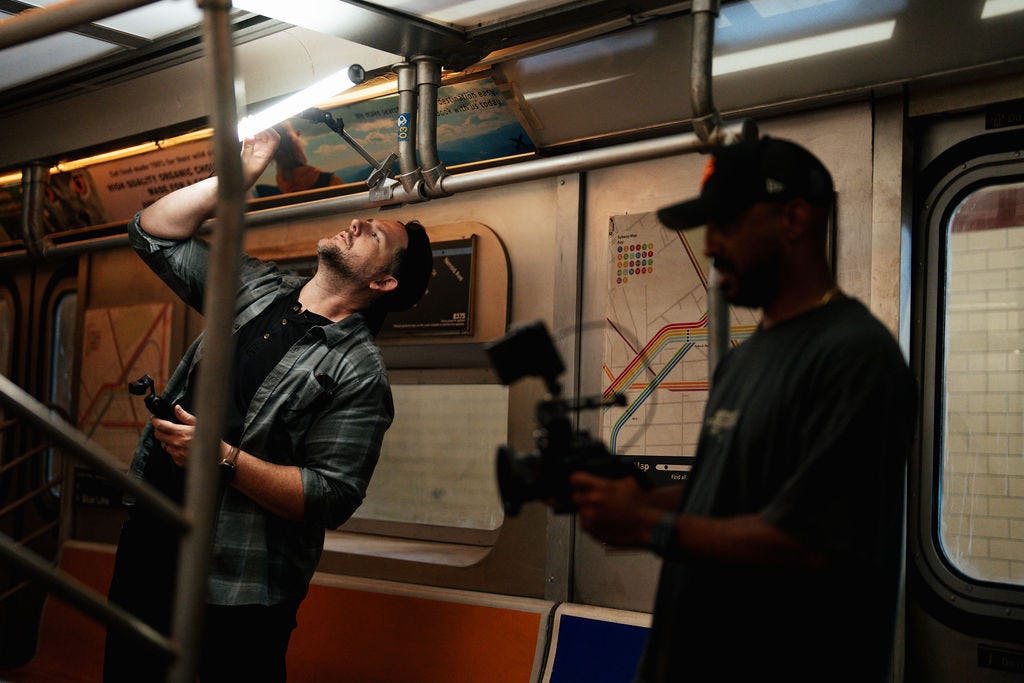
I'm a Monet lighter, not a Rembrandt
There's a lighting idea called Rembrandt lighting. It's about the position and hardness of the light, and the small triangle it puts on the cheek of whoever you're shooting. It's precise. It's a look you build.
I always say I'm more of a Monet than a Rembrandt. I work in big brushstrokes. I'm not a super detail-oriented filmmaker when it comes to lighting. I'd rather walk into a space, find the angles and the composition in the moment, and then use as little light and grip as I can get away with to accent what's already there.
The best proof I have is a short I shot in a rented space in Los Angeles. I put steel green gels over the fluorescent lights that were already in the room. Then I used one small Arri tungsten light as a backlight on the actors. That was the whole setup. No light stands everywhere, the space stayed wide open, and I could move around and shoot.
It looked good. More people commented on the cinematography of that little short than on most of the stuff where I spent hours lighting every shot the way you're supposed to.
I want to be careful here. I'm not saying lighting is a waste of time. Adding lights and taking the time to set up is needed, for sure, and there's a place for it. But the opposite is true too, and this shoot was a good reminder. You don't always need more light, or more gear. You can do a lot with a little.
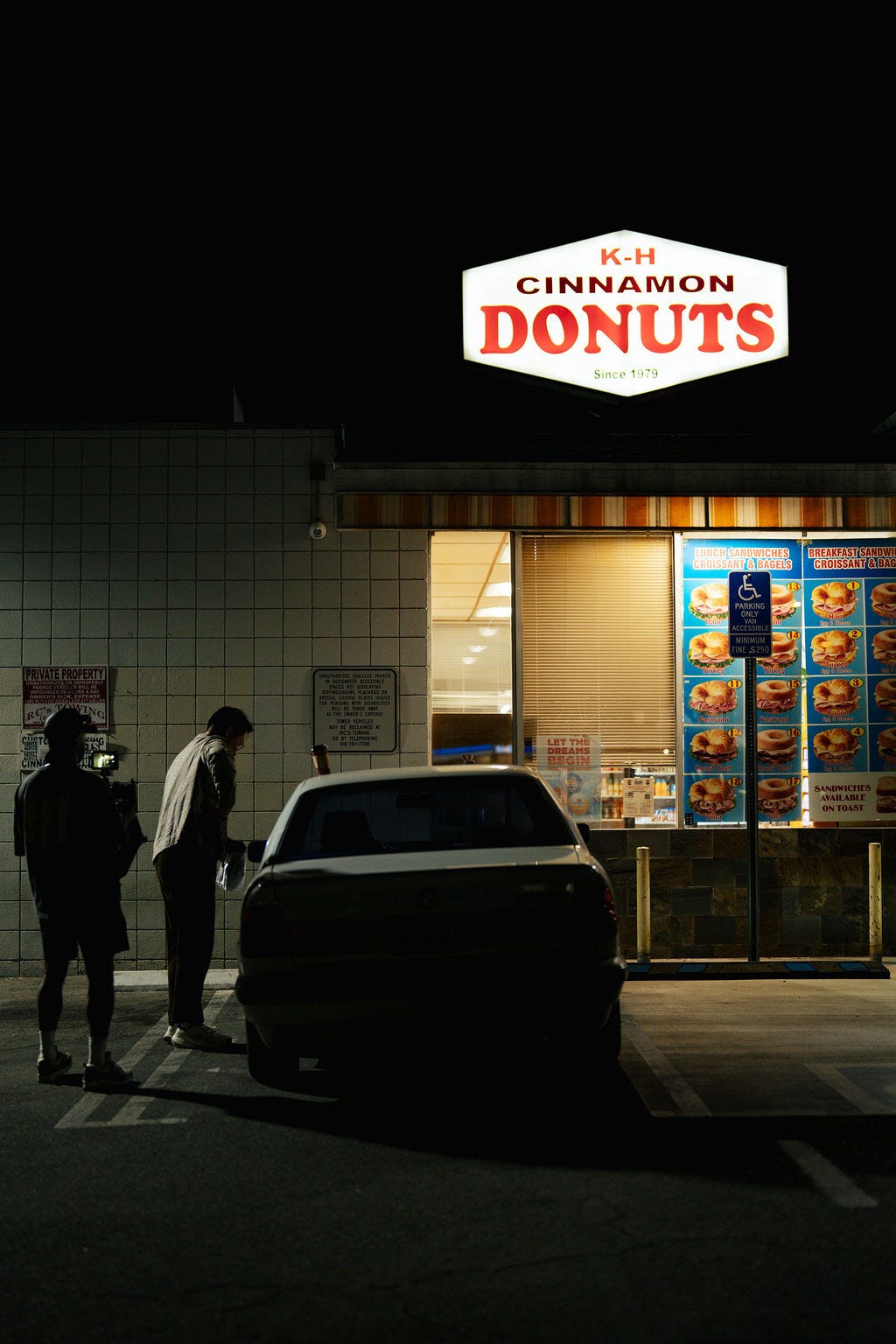
What "Create More With Less" actually means
Someone recently asked me what the tagline on my LinkedIn means. "Create More With Less." It's on my websites too, and it's the mentality I grew up with. I've been drifting back toward it lately and remembering why I liked it so much.
It isn't about being cheap. It isn't necessarily about shooting guerrilla style, though it can be both of those things. It's about being creative, using your eye to find the beauty in what's already there, and accenting it only if it needs it. Sometimes the beauty is there and you just need to see the face a little better. It's too dark, so you add a little light. That's it.
The part where I want to make a movie
The commercial also made me want to shoot more narrative work. Shooting this way is faster. You get more shots in a day, you move quicker, and it makes a narrative project feel actually possible to me.
I should say, I don't want to spend a year of my life making a movie. I never really have. I've always been the mumblecore type: make a movie with friends, shoot it in a couple of weeks, move on. I have too many stories I want to tell and too many projects I want to shoot to justify giving one of them that much of my life. I know some people will scoff at that. If you're not that dedicated to the project, is it even worth making? Honestly, I don't know. Maybe not.
Part of it, I'm sure, is that I want fast feedback. These days I make commercials, ads, and social content, and the loop is short. You shoot it and have a version done the next day or the following week. I've gotten used to that speed, and I want to see if I can keep it while holding the quality up, and make something people actually want to watch on a short timeline and a small budget.
That's the experiment. I'm not telling you to do it. It's just something I want to do. Hopefully I'll have some of these projects to share soon, and if it falls apart, I'll tell you that too.
If you've got your own version of "more with less," a shoot or a project where taking things away is what made it work, reply and tell me about it. I read all of them.